18. The Interview: Bill Janitz
Director, Automotive Practice at Golin, and long-time Public Relations Manager for Kyle Busch

Editor’s Note: People Who Race tells the stories behind the faces in motorsports and are told by veteran award-winning television broadcaster Kaitlyn Vincie.
For Bill Janitz, a childhood spent just a few miles from Michigan International Speedway sparked a lifelong passion for racing. What began with trips to the track alongside his father eventually became a career in public relations that took him from his hometown race track to NASCAR’s biggest stages. Most notably, it led to a 15-year partnership with two-time NASCAR Cup Series champion Kyle Busch, giving Janitz a front-row seat to one of the sport’s most accomplished—and most misunderstood—competitors. Janitz reflects on his path through the industry, the lessons he learned working alongside Busch, and the legacy of the man behind the helmet.
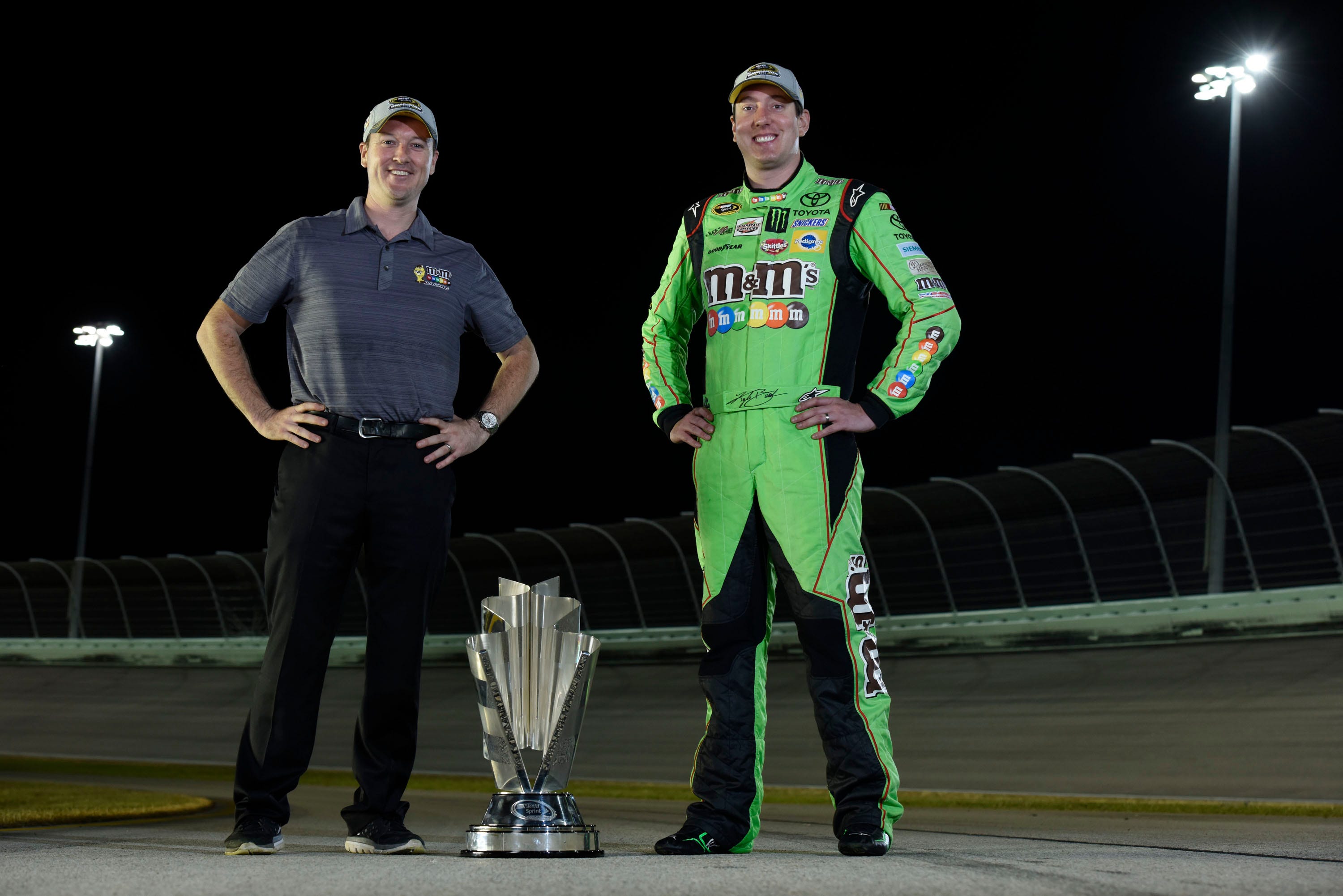
KAITLYN VINCIE: I want to go back to the beginning for you. You studied communication and media studies at Michigan State. What led you in that direction as a young person?
BILL JANITZ: Probably like a lot of people, I paid attention to the sport from a young age. I grew up in the little town of Brooklyn, Michigan, only three or four miles from the race track. We lived on a lake there, and every summer my dad would take me to the race track. I enjoyed going to anything that was there, whether it was an IndyCar weekend or NASCAR. I started going when I was 6 years old, and it was something my dad and I did together. That was special, and it’s something I’ll always remember. That was really my first taste of being around racing.
KAITLYN VINCIE: Is that why you decided to study communications? Was your intent to work in public relations within NASCAR?
I was definitely interested in the public relations side in general, but I didn’t know exactly what I wanted to do. Working in racing almost felt like a fantasy—not something I could actually go do. I went to school with an interest in working in sports in general. That was the goal.
At one point during college, I submitted a résumé for an internship with Michigan International Speedway. I figured there were probably thousands of people applying to race tracks and race teams. About a year after college, they called and said they had an open entry-level position in the PR department and asked if I’d be interested in talking about it. They needed someone to handle PR, but also a bit of community relations, and they wanted someone from the immediate area who could attend community events and establish relationships.
I ended up getting the job in June 2001. During the summer of 2002, much of the PR department had left, so there were only three of us. We had our first IndyCar race weekend, and I had to learn a lot of new things, like running the media center on my own. I did have help from Kristi King, who was running public relations at Rockingham Speedway at the time. She is a dear friend of mine and was a massive help during that period. But I really had to sink or swim, so I learned a lot of the job on my own. I was there for several years and eventually became the Director of Public Relations for the track.


KAITLYN VINCIE: You eventually moved to True Speed Communication, which aligned you with Kyle Busch. That turned into a 15-year relationship as his public relations representative. You work so closely with drivers when you represent them, and you knew him better than most. What did you admire about him as a competitor?
As a competitor, he’s the most competitive person I’ve ever met in my entire life. He wanted second place five laps behind—just how he liked it. He was competitive on the race track, and everyone saw that, but it showed up in every little thing he did. He wanted to win and be the best. People think he didn’t necessarily like the media side of things, but there were a lot of times when he actually did. Even with the FOX hangar shoot, he wanted to be the best at the walk-ups, the poses and delivering the one-liners. When he committed to something, he did it with 100 percent determination and enthusiasm.
A lot of things people didn’t see about him were that he was great at remembering talking points, and we worked on that throughout the years. He was also always very punctual. He wanted to be on time. He always showed up, did what I asked of him, and paid attention to every little detail. Sometimes he’d ask you a question he already knew the answer to because he wanted to see if you knew it.
We had a great working relationship over all those years, which I really appreciated. One of the things I always liked about him was that you always knew where you stood with him. I spent 15 years with him, but I wouldn’t have spent 15 days with him if I’d had thin skin. You had to have thick skin because he’d push you on things and make you better.


KAITLYN VINCIE: A lot of the things you just described are exactly why I appreciated him as well. I want to talk about something you mentioned on your Instagram — the painting at Phoenix in 2018. Can you tell me that story?
I love this story because I think it’s an easy way to illustrate his competitiveness. We were in Phoenix, and the team was trying to advance to the Championship 4 on points the following week at Homestead. We ended up doing that after the second stage, and from there he just went for the race win. He ended up finishing about half a straightaway ahead of Brad Keselowski, and those two had quite a rivalry over the years.
We got to Victory Lane, where an artist was painting the finish. Naturally, when you’re painting a finish, you include the first two cars. They had Kyle come over to autograph it, so he walked over, took one look at the painting, and said, “The finish wasn’t that close.” The artist’s jaw just dropped. I couldn’t stop laughing because that was Kyle Busch in a nutshell. That was our guy.

KAITLYN VINCIE: That sums him up perfectly. How do you feel you watched him evolve as both a person and a driver over all those years?
I’d say when it comes to some of the mistakes he made, he didn’t regret them because he learned from them, and they helped him later in life. He didn’t say this often, but he referenced in a few interviews years ago that he wished the incident with Ron Hornaday had never happened. I think that was a turning point for him.
Around that same time, he became a truck owner. Suddenly he had his own shop, and he was making major decisions. Now you’re not only racing and working for your family, but you have a lot of families depending on you at the race shop. I think all of those experiences were eye-opening and helped him see the bigger picture—not only on the truck side, but in the Cup Series as well.
Then, once he got married and started a family, I could tell he didn’t want his children to make some of the mistakes he had made. I think he worked hard with Brexton, and I’m sure Lennix as well, on those kinds of things. You can see that in Brexton today. I spent some time with them several weeks ago, and I was struck by his maturity, his manners and his politeness at 11 years old. He’s already a talented race car driver, and hopefully he won’t have to learn some of those hard lessons the way Kyle did.
KAITLYN VINCIE: I appreciate you sharing those stories about Kyle. I know it’s been such a difficult time for the sport in so many ways. The two of you are synonymous in my mind forever as that driver-PR representative duo for all those years.
I’ve been seeing fans say they feel a little lost, and to be honest with you, I feel a little lost myself. I’m going to the race track this weekend at Chicago, and you almost expect to see him walking up pit road. Or I’ll think about stopping by the bus to see him and Samantha. It still doesn’t seem real. Everyone is going through this, including the fans.
One of the conversations that’s happened since he passed has been about Most Popular Driver. Chase Elliott was so gracious in talking about that and saying he’d love to see Kyle win it. It’s kind of crazy because, as much as Kyle wore that black hat, he didn’t really love it. Human nature is that you want to be loved. I think he believed that, with everything he had accomplished and how successful he’d been, people would eventually get behind him. It was starting to happen more as he got older, and I think that’s part of the natural cycle for a successful, long-term Hall of Fame driver. I’d love to see the fans rally behind him and vote him Most Popular Driver because, I’m telling you, he’d get a kick out of that. He talked about it more than people would ever know.
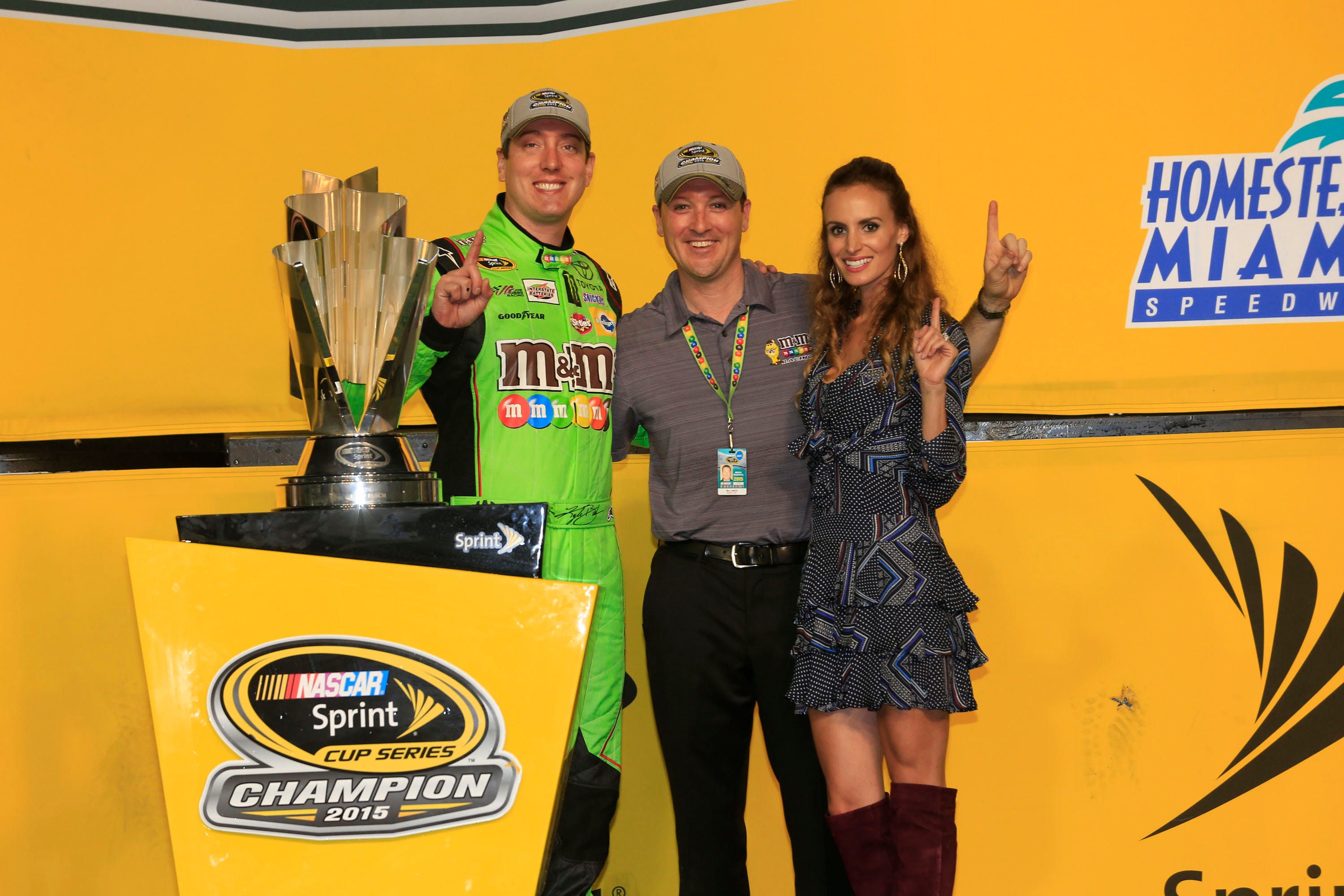
KAITLYN VINCIE: I completely agree with that, and I really hope we see that happen.
Every sport has its villain. Some people lean into that role, and others aren’t as comfortable with it. But if you had a bunch of people who weren’t passionate and didn’t care, nobody would want to watch the sport. He was one of the people who made NASCAR fun to watch, and I was incredibly lucky to have a front-row seat to watch greatness for 15 years.
We went through tough times, just like any working relationship, but it made me a better person and a better public relations representative. I call it the “Kyle Busch School of Hard Knocks,” because that’s exactly what it was. I’m thankful for all those moments when he pushed me to be better at what I do.
KAITLYN VINCIE: I feel the same way. He was one of those individuals who made everyone around him better at their jobs. Fast-forward to the present day: you’re the Director of Automotive Practice at Golin. What does your job entail on a day-to-day basis?
For a long time, I worked on the driver side of public relations, and now I’ve moved over to the manufacturer side. You’re constantly working with driver development, pitching media and connecting the dots for hospitality appearances, executive photo opportunities, notes and quotes and various initiatives.
On the Toyota side, it’s been an incredible year watching what they’ve been able to accomplish and seeing the success of their driver development program. Watching Corey Heim win was a big moment for TRD. Brent Crews is another driver showing a lot of promise, so we’re working with all of these drivers to help tell the Toyota story. Toyota has been in the sport for 20 years, and I’ve worked with them for almost that entire time. They care deeply about being part of this sport and about the fan experience at the race track, so I’ve really enjoyed being part of that.
Way before Dale Jr said it on his podcast. Years before, I said Kyle didn't want to be the black hatted/hated driver. I could see it in his face. Though he brought a lot on himself fans didn't give him a choice, so he just leaned into it, much like Denny has the last few years. But after what happened with Denny, his dad, the lost championship and fire, fans have softened on DH too. And in my eyes Denny didn't love the villain role as much as he thought he did. Like Bill said, everyone wants to be loved and appreciated.
❤️❤️❤️